
CURTAINS & BLINDS · DOHA
A softer setting for switching off.
Bedroom curtains need to suit your sleep routine as well as the room. Tell us when you sleep, where unwanted light enters and how much daytime openness you want to keep.
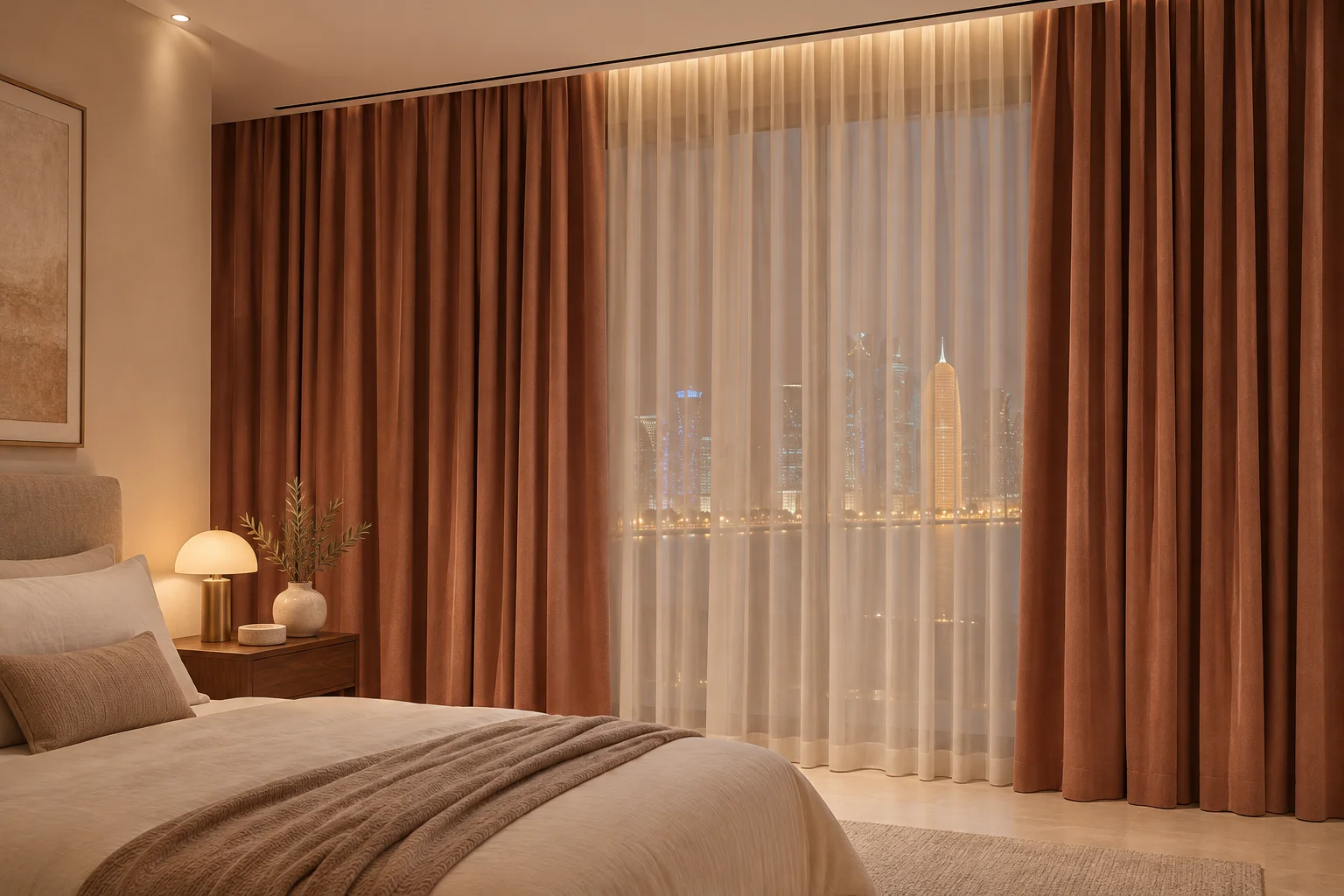
Illustrative inspiration · materials confirmed from samples
01
Work around your sleeping hours
A person sleeping after a night shift may need a different specification from someone mainly bothered by early sunrise. Discuss the window orientation if known and the areas where light currently escapes. This helps focus the material and coverage discussion.
02
Plan the edges as well as the lining
Opaque fabric reduces light through the panel, while track position and overlap influence the edges. A fitted result depends on the room and opening. Avoid assuming that a material label guarantees complete darkness after installation.
03
Make daylight a separate choice
A sheer layer can give the room a softer daytime appearance while lined curtains remain open. Double hardware needs sufficient depth and space beside the window. Consider bedside furniture, wardrobe doors and window handles before approving the arrangement.
04
Choose a finish you can live with
A neat floor-length drop may suit one room while another needs easier clearance for cleaning. Follow the selected fabric care instructions and keep access to the track practical. For children’s rooms, ask about suitable operating systems and safety guidance.
A FEW PRACTICAL DETAILS
Before you choose
Do I need a black curtain?
No. A suitable opaque construction can sit behind many decorative colours.
Can I keep a bright daytime look?
A separate sheer layer can provide a lighter setting, subject to the room’s privacy needs.
Keep exploring
YOUR NEXT CHAPTER
Let’s make your room feel finished.
Share a room photo on WhatsApp and tell us the look you love. Final materials and fitting are confirmed together.